HARGA : CALL (klik disini untuk informasi harga lebih detil)
PRODUCT CODE : CPAP-SG6900-SNBT

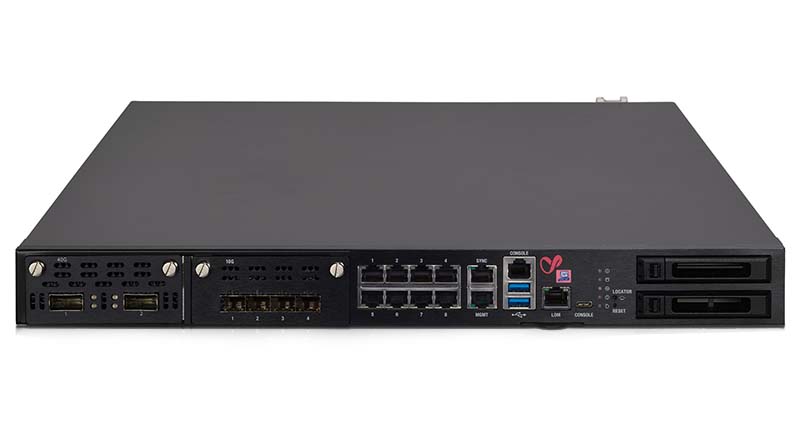
Check Point Quantum 6900 Next Generation Firewalls enables enterprises to deploy the industry’s leading threat prevention capabilities at all points of their infrastructure, scaling security almost infinitely according to their changing business needs. Check Point Quantum 6900 also dramatically accelerates the efficiency of their security operations. This enables enterprises to prevent and block even the most advanced attacks, before they can disrupt business. A Lights-Out-Management (LOM) card provides out-of-band remote management to remotely diagnose, start, restart and manage the Check Point Quantum 6900 appliance from a remote location.
Check Point Quantum 6900 includes 10 on-board 1 GbE copper ports. Add additional I/O as you like in the two expansion slots; 8x 1GbE copper, 4x 1GbE fiber, 4x 10GbE SFP+ or 2x 40GbE QSFP+. Check Point Quantum 6900 security gateways include all security technologies in the SandBlast (sandboxing) software package for one year. Purchase a renewal for NGFW, NGTP or SandBlast (SNBT) for subsequent years as you like. Check Point SandBlast Threat Emulation is an evasion-resistant sandbox that provides zero-day protection from advanced and unknown threats on Check Point Quantum 6900. SandBlast Threat Extraction (CDR) ensures quick delivery of safe email and web content to users.
Check Point Quantum 6900 as next generation firewall (NGFW) provides capabilities beyond that of a stateful network firewall, technology that was first pioneered in 1994 by Check Point Software Technologies. A stateful firewall like Check Point Quantum 6900 is a network security device that filters incoming and outgoing network traffic based upon Internet Protocol (IP) port and IP addresses. By intelligently inspecting the payload of some packets, new connection requests can be associated with existing legitimate connections. A next generation firewall adds additional features such as application control, integrated intrusion prevention (IPS) and often more advanced threat prevention capabilities like sandboxing.